 Economy

HCM City leader welcomes World Economic Forum managing director
1.
|
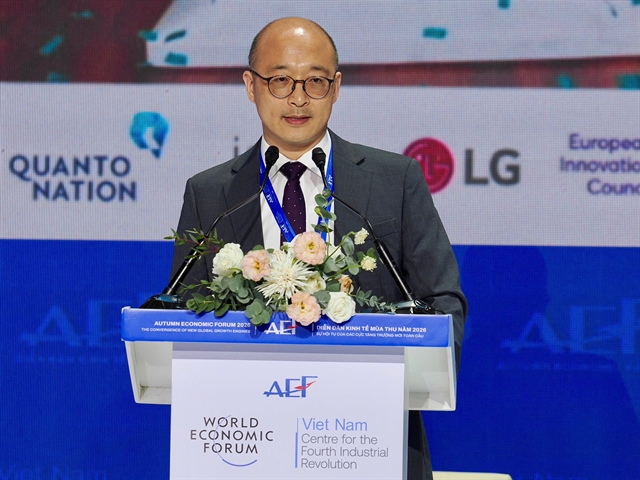
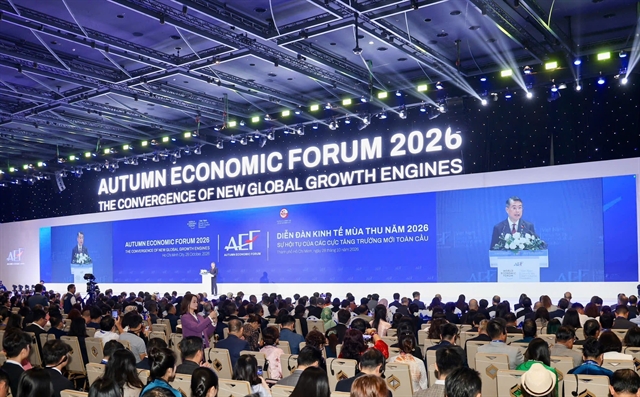
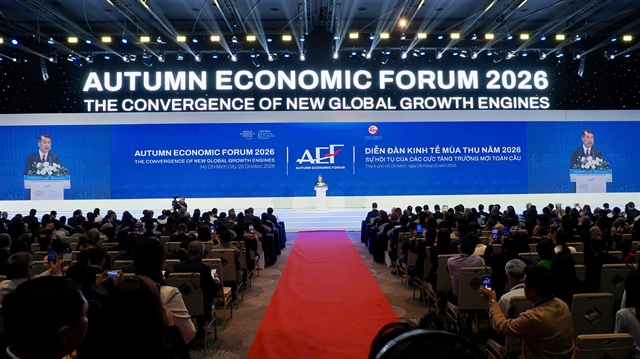
| Sungmin Lee, head of Quantum Solutions at Pasqal Korea, speaks at a session on developing a quantum technology ecosystem in Việt Nam as part of the Autumn Economic Forum 2026 in HCM City on October 27. — Photos courtesy of the organiers |
HCM CITY — Việt Nam should focus on practical applications, talent development and cybersecurity while building international partnerships to develop its quantum technology ecosystem, rather than attempting to establish the entire value chain, experts have said.
A recent Roland Berger study identified quantum technology as one of five transformative technologies likely to reshape industries over the next five years.
The experts urged Việt Nam to prioritise areas suited to its strengths and market needs.
Speaking at a discussion on building a quantum technology ecosystem in Việt Nam at the Autumn Economic Forum, Sungmin Lee, head of Quantum Solutions at Pasqal Korea, identified quantum sensing, security and computing as key areas.
Quantum sensing already had applications in medical examinations and anomaly detection, while quantum computing could help solve complex optimisation problems in energy, logistics and manufacturing and simulate materials that conventional computers could not model efficiently, he said.
Việt Nam could build on its strengths in artificial intelligence, software and manufacturing by training specialists in quantum computing and developing solutions combining artificial intelligence and quantum computing, he said.
He called on universities, businesses and public institutions to prepare students and employees for the technology.
“Training should start now, even if the hardware arrives a little later.”
Nguyễn Mạnh Cường, director of innovation and technology development at Sovico Group, said Việt Nam could not invest in every area of quantum technology and should focus on applications, security and engineering.
International partnerships, particularly with countries such as France and South Korea, which had more advanced capabilities, would also be important, he said.
Industry demand should dictate investment, with authorities working alongside businesses to identify practical problems that quantum technology could solve, he added.
Dr Huỳnh Minh Trung, a lecturer in the faculty of physics and engineering physics at the University of Science, Vietnam National University - HCM City, said the country should first assess its research infrastructure and talent pool.
A national survey of quantum laboratories, their capabilities and researchers' experience would help identify strengths and guide investment, he said.
He also called for closer university-industry ties, greater business funding for research and training in mathematics, computer science, quantum algorithms,and optimisation. These skills could be developed before quantum hardware becomes widely available, he added.
Lê Quốc Cường, a member of the HCM City Development Research Board’s subcommittee on science, technology, innovation and digital transformation, said: “The current institutional landscape presents excellent opportunities for Việt Nam, particularly HCM City, to advance quantum technology, which is among the country’s strategic technology priorities.
“The Special Urban Development Law, which took effect on October 1, 2026, together with existing special mechanisms, creates opportunities for the city to establish new development spaces through both technical infrastructure and regulatory frameworks.”
Protecting digital sovereignty
Experts warned that encrypted data stolen today could be decrypted in the future by sufficiently powerful quantum computers.
The threat, known as “Q-Day”, refers to a point when quantum computers could break some widely used public-key encryption systems. Criminals could collect encrypted information now and store it until the technology becomes capable of decrypting it, putting sensitive data at risk.
Cường said protecting digital sovereignty is increasingly important as HCM City relies increasingly on data and artificial intelligence, particularly in finance, banking, public services and critical digital infrastructure.
The city should prioritise the transition to post-quantum cryptography based on the importance of its data and systems, running appropriate programmes, testing migration methods, and planning a phased transition to minimise disruption, he said.
He proposed four priorities: controlled policy trials, technical standards, commercialisation and workforce development.
|
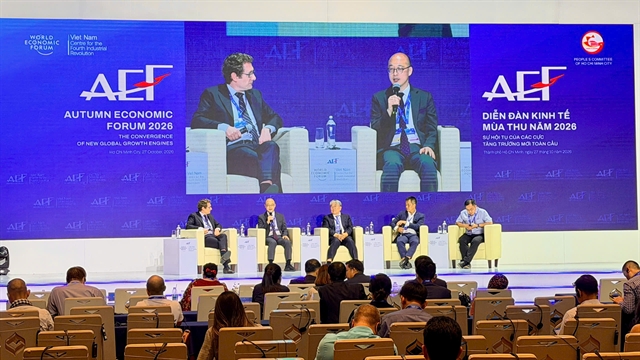
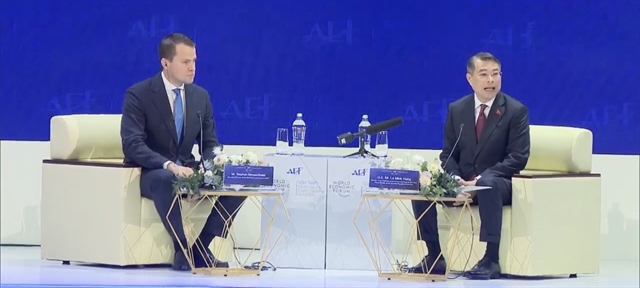
| Panelists discuss building a quantum technology ecosystem in Việt Nam at the Autumn Economic Forum in HCM City on October 27. |
Quantum security requires specialised expertise and no single organisation could address the challenges alone, and so HCM City should expand cooperation between the Government, universities and businesses to include international partners, he said.
Dr Tony Trần, an expert at HCM City's Centre for the Fourth Industrial Revolution, said governments and businesses should prepare for the post-quantum era despite uncertainty over when quantum computers would pose a serious security threat.
Panellists at a discussion on data security and cybersecurity in the quantum era said artificial intelligence is already helping identify vulnerabilities in digital systems.
As artificial intelligence and quantum computing advance, banks and other organisations would need to reassess their defences and seek clearer policy guidance on evaluating existing encryption systems and setting investment priorities.
Dr Stephen Oh, vice president and chief technology officer of Korea Quantum Computing, said organisations need to migrate existing systems to post-quantum cryptography and incorporate quantum-safe security measures into new data centres and infrastructure from the outset.
The transition involves more than replacing encryption algorithms. Organisations needed to identify where cryptography is used, assess systems protecting sensitive or long-term confidential data, examine dependencies and compatibility, and plan testing and migration, he added.
For Việt Nam's banks and critical infrastructure operators, the challenge is to prioritise limited resources, identify practical pilot projects and develop the expertise needed for wider deployment.
Trần Phú Nghĩa, director of audit and cybersecurity lead at Galaxy Holding, said Vietnamese organisations need international partners that could transfer core technology, train local specialists and provide long-term software updates and vulnerability management, rather than merely supply products.
Quantum computers would complement rather than replace conventional computers, working alongside supercomputers and graphics processing units, he said.
Developing domestic expertise and adapting technologies to Vietnamese regulations and operational needs would be essential to maintaining control over data, he said.
Partners in Singapore, South Korea, Japan and France could help Việt Nam develop its quantum ecosystem, but the country also needs the skills to deploy and eventually develop technologies independently, he added.
Experts said coordinated investment in research, skills, practical applications and security standards would help Việt Nam establish a position in the emerging field.
Early investment guided by market demand and domestic strengths would be crucial to turning quantum technology into lasting economic value, they added. — VNS
Economy
 Economy
 Economy
 Economy
 Economy
 Economy
 Economy
 Economy
 Economy
 Economy
 Economy
 Economy
 Economy
 Economy
 Economy




